
Bullbet • sports

Sports reading focused on what changes before the game

At Bullbet, the sports category brings together editorial context for those who follow matches, compare markets, and want to understand the pace of the odds without rushing or empty guesses. The reading starts with Brazilian football, but the perspective applies to any matchup where the price moves, the scenario matters, and the decision calls for calm.

Here, the starting point is simple: observe the game, separate signal from noise, and use concrete criteria. What matters is the context of the match, the consistency of the line, and the way each market responds to the moment.

Bullbet sports banner

Featured image linked to the external destination. On mobile, the reading continues separately from the image to preserve clarity and contrast.

What Bullbet looks at before talking about a market

In sports, the difference between a useful text and a rushed text usually lies in the opening question. It is not “who wins?”. It is “what is being read here?”. When the match enters the editorial radar, Bullbet prioritizes concrete signals: matchup context, recent line behavior, event timing, and the relationship between market and game.

This avoids the trap of turning every round into a promise. The proposal is different. First comes the reading. Then, if it makes sense, the comparison between options.

Criterion Practical reading What Bullbet avoids
Match context Observe home advantage, momentum, and the weight of the matchup before drawing any conclusion. Treat the game as if it were the same as all the others.
Odds movement Notice when the line reacts to news, pace, or market pressure. Taking a price change as a guarantee of the result.
Chosen market Compare options calmly and understand what each market actually covers. Entering impulsively into unclear markets.
Reading moment Separate pre-match, live, and post-match as different phases of analysis. Using the same yardstick for everything.

Criteria that go into market reading

Before commenting on any market, Bullbet checks whether the reading is supported by elements that the game itself offers. This includes how the teams perform at home and away, the difference between a balanced matchup and a duel with a more open scenario, and the kind of information that truly changes the interpretation. The idea is not to look for a ready-made answer, but to identify which signals carry enough weight to justify a more careful analysis and which details only serve as distractions.

Another important point is separating impression from evidence. A striking scoreline, a traditional name, or a short streak of results can influence perception, but they do not always explain the market clearly. That is why Bullbet looks at what supports the reading: game pace, recent consistency, tactical approach, and the relationship between expectation and observed performance. When these factors do not align, the text needs to make that visible instead of forcing a conclusion.

Bullbet also considers whether the chosen market matches the type of game being analyzed. There are matches where the focus makes more sense on shot volume, others where the center of the reading is defensive protection, and others where the interest lies in how the scenario changes over time. Each market calls for a different angle, and mixing them all at once usually creates confusing explanations. The analysis becomes more useful when the angle is defined before the opinion.

In pre-match, the reading depends on information that is still stable and on signals that may change until kickoff. In live play, Bullbet observes whether the confirmed dynamics on the field reinforce or weaken the earlier reading. This avoids treating a match as if it were frozen. The market changes because the game changes, and the analysis needs to follow that change without abandoning the criterion used at the start.

It is also worth looking at the language of the market itself, because not every option describes the same thing. Some lines call for attention to the final result, others to partial behavior, and others to the gap between expectation and execution. When this is not explained, the reader may think they are comparing equivalent alternatives, when in practice each one answers a different question. Bullbet tries to make that difference explicit so the reading does not depend on assumptions.

Finally, before talking about a market, Bullbet checks whether there is room for a responsible and understandable explanation. If the scenario is ambiguous, the best move is not to overstate certainty, but to show what is still open. This stance helps the content remain editorially useful without turning analysis into a promise. In sports, clarity matters more than haste, and the reading gains strength when it respects what the game really allows us to say.

Three readings that help you see the game better

1. Line that speaks with the game

When the odd moves, the useful question is not “did it go up or down?” It is “why?”. A change may reflect a detail of the context, a collective market reading, or just a reaction too brief to become a thesis.

  • Compare the direction of the line with the moment of the match.
  • Read the market together with the scenario, not in isolation.
  • Be wary of conclusions that are too quick.

Practical reading of the movement

In sports, the line makes more sense when you connect the movement to what happens on the field, not just to the number shown. Changes after a confirmed lineup, injury, or tactical adjustment tend to carry more context than swings without new facts. Observing the pace of the game, the teams’ approach, and the type of pressure helps separate noise from signal. That way, the analysis becomes more objective and less dependent on impulse.

It is also worth paying attention to the timing of the change. A slow correction usually indicates a gradual adjustment in expectations, while a sharp variation may be the effect of a reading focused on a specific event. Before interpreting, check whether the change matches the scenario of the duel, the emotional moment of the teams, and the phase the match is in. This filter reduces rushed reading and improves comparison between markets.

Finally, the line should be understood as part of a set, not as an isolated answer. If the game’s behavior does not follow the direction of the odd, the signal may be weakened or still incomplete. The analysis becomes more solid when you cross the movement with possession, intensity, chances created, and each side’s competitive need. In this way, the reading gains consistency without losing caution.


2. Market that fits the match

Not every game calls for the same approach. Some matches call for a broader reading; others require focus on pace, marking, and control. Choosing the right market is part of the analysis, not a detail.

  • See whether the match favors a reading of goals, result, or behavior.
  • Avoid looking for a ready-made answer where the game is still undecided.
  • Prefer consistency between scenario and choice.

3. Time to decide

In sports, time matters. There are moments when waiting is better than insisting. Bullbet treats reading as a process: first understand, then compare, and finally decide with more clarity.

  • Pre-match and live do not follow the same logic.
  • A good reading can lose strength if the context changes.
  • Deciding calmly usually leads to more consistent analysis.
Bullbet sports image 1
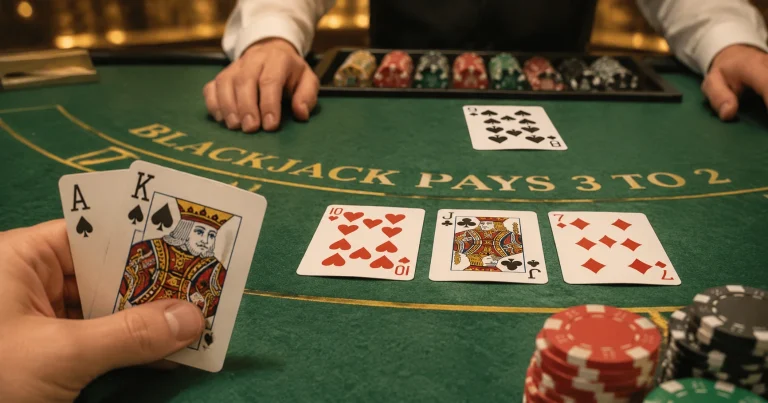
Visual reading of the sports theme, with a focus on the comparison between scenario and market.
Bullbet sports image 2
An editorial reminder: the match changes, the line responds, and the interpretation needs to keep up.

Questions that come up before comparing options

Is Bullbet’s focus to predict the result?

No. The focus is editorial reading of sports, especially Brazilian football, with attention to market behavior and the context of the match. The idea is to organize criteria, not sell certainty.

Why talk so much about odds?

Because the odd shows how the market is seeing the event at that moment. This helps notice movement, pressure, and changes in reading, as long as the analysis does not ignore what is happening on the field.

What makes a comparison useful?

A useful comparison considers the match, the moment, and the type of market. When the choice comes from context, the reading becomes clearer. When it comes from impulse, the chance of noise grows.

How do you use the sports category without getting lost?

Start with the scenario. Read the text calmly, observe the editorial criteria, and only then follow the external destination, if it makes sense for what you want to analyze at the moment.

In sports, the best reading is usually the one that does not try to guess everything at once. Bullbet prefers to separate context, market, and moment. It is that gap between one thing and another that helps you see more clearly what is happening.
1

Open the scenario

See what the game is, the weight of the matchup, and what may influence the reading before the ball rolls.

2

Compare the signals

Notice the direction of the odd, the type of market, and the consistency between price and context.

3

Separate the moment

Pre-match and live require different rhythms. Mixing the two readings usually confuses more than it helps.

4

Choose calmly

If the reading still feels loose, go back one step. In sports, clarity is worth more than haste.

Want to continue to the external destination?

Use the link below when you want to continue the experience outside the page and check what is available in the registration environment.

Before you go, it is worth reviewing

  • Does the market make sense for the game you are reading?
  • Does the line change have context, or does it only seem eye-catching?
  • Are you comparing calmly or just following the impulse?

The second repeated image on the page was kept for technical reasons and can be used as visual reinforcement in another reading of the topic.

Bullbet sports image 3
Complementary image to reinforce the reading of the sports topic in the editorial flow.
Bullbet sports image 4
The same external destination, preserved to maintain consistency with the received resources.
English (Philippines)