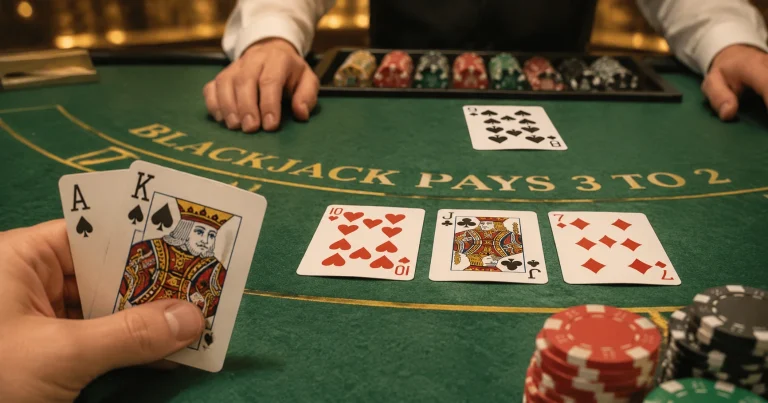
Leitura editorial
Penañ a 21+3
Danvezadur Penañ a 21+3 Kartennoù pennañ hag ar prizioù da 21+3 Strategiezhioù ha pouezioù evit c'hoari 21+3 Kemm gant re all eus ar c'hoarioù kazin…
Ler artigo ↗
In bullbet slots, the focus is not on promising results. It is on observing what each game shows: theme, rhythm, special symbols, rules, and the real feel of the session. Those who enter calmly usually notice differences that are missed in a hurry.
If the idea is to choose better, it is worth starting with what is visible on the screen and what is written in the rules. The rest comes later. No rush.

Some slots look similar from a distance, but change a lot when the reading is slower. Here, comparison helps more than haste.

The first contact with a slot says a lot about the kind of experience it offers. Some games are drier, with a straightforward read. Others are more visual, relying on animations, symbols, and small screen shifts to keep attention. At bullbet, the idea is to look at this without rushing, because the theme is not just there to decorate. It usually guides the rhythm.
It is also worth noticing how the screen responds. Some titles keep the reading clean; others concentrate information in a few spaces and demand more attention. This difference changes the way you follow the session, especially when time is short.

Before any action, the most sensible thing is to check how the game explains its own rules. Paylines, grids, special symbols, multipliers, and any extra features need to be clear. If the rules are confusing, the experience tends to become confusing too. Simple as that.
Another point is the feeling of movement. Not every slot delivers the same kind of cadence. Some seem more linear; others alternate fast moments with visual pauses. This behavior matters because it helps you understand whether the title suits a more objective read or a more patient one.

When talking about volatility, the conversation needs to stay concrete. It is not about predicting outcomes. It is about noticing how the game distributes events, how it handles long streaks, and what kind of patience it demands. This view avoids rushed reading and reduces frustration with titles that call for a different kind of waiting.
Anyone who reads slots carefully usually notices something important: the same theme can hide very different behaviors. That is why comparing one game with another, even within the same category, helps more than relying on appearance alone.
On a first pass, it is worth separating what is appearance from what really helps you understand the slot. The art may catch your eye, but what matters is whether it speaks to the game’s reading. When visual elements compete with each other, it becomes harder to identify symbols, features, and important notices. A more organized layout, on the other hand, usually makes mental navigation easier and reduces rework. This simple observation keeps the choice from being guided only by the initial impact, which does not always say much about the real experience.
Another useful point is checking whether the interface delivers information at the right moment. In some slots, everything appears directly and the player immediately understands where to look. In others, the screen stacks layers, animations, and small effects that require more patience. This is neither good nor bad by itself, but it changes the kind of attention required quite a bit. If the initial read already feels tiring, the game may work better for someone who prefers to follow every detail without rushing.
It also helps to observe how the slot handles special symbols. They do not serve only to decorate the grid; they usually indicate changes in rhythm, extra possibilities, or moments when the screen becomes more active. When these symbols are easy to locate and understand, the first read becomes more objective. When they require constant comparison with the rules, the experience can become choppy. That is why it is worth seeking clarity before getting attached to the visual effect.
The way the game presents its structure also deserves attention. Some slots have a simple read, where the grid and main elements are obvious from the start. Others spread information in a less obvious way, which may require a second look to notice important details. At this stage, the goal is not to master everything at once, but to identify whether the overall organization makes sense. This perception helps avoid rushed decisions based on a superficial impression.
Another practical caution is to observe whether the visual rhythm matches the time available. A very fast slot can be interesting for those who like constant stimulation, but it may get in the way of anyone who wants to analyze the session more calmly. A more restrained game, on the other hand, makes reading easier and lets you follow each change more closely. This difference matters a lot on the first pass, because it defines whether the title feels inviting or merely intense. What works for one person can tire another quickly.
Finally, the best approach is to do a test read before forming an opinion. Instead of looking for an immediate answer, it is worth noticing how the game behaves in the first moments and whether that dynamic stays consistent. If the screen looks clear, the rules are understandable, and the rhythm does not create confusion, the analysis already has a solid base. If something feels excessive or hard to read, that is useful information too. The first pass is precisely there to separate curiosity from real compatibility.
These blocks help separate visual perception from real functioning. They are small, but they make a difference when comparing titles.
Instead of looking for a generic “best,” it is worth separating what each slot concretely offers. The comparison becomes more honest when it starts from what the screen shows.
Some titles lean on scenery, animation, and large symbols. They can be engaging, but they also demand more attention so the reading does not stay superficial. The ideal is to observe whether the aesthetics help you understand the session or just take up space.
Other slots prefer a clean presentation, with concentrated information and less noise. This makes quick reading easier, especially for those who want to understand the structure without navigating too many elements on the screen.
If the rules include specific details about symbols, features, and usage conditions, the text stops being a complement and becomes a central part of the analysis. That is where editorial reading makes a difference.
Not every game suits haste. Some work better when the visitor reads, compares, and returns to what they have already seen. This pause often reveals what a rushed pass hides.
A good read does not need to be too long, but it does need to be careful. These points help avoid loose interpretation.
The answers below are not meant to close the conversation. They are there to guide reading and reduce noise when comparing games.
Start with the basics: theme, rules, mechanics, and pace. If these four points are not clear, it is worth revisiting the page and looking at the screen more calmly. Rushing often hides details that change how the game is perceived.
Both matter, but not in the same way. Appearance helps you understand the game’s mood; function shows what it actually does. When the two conflict, the rules and the reading of the mechanics carry more weight.
Because games with the same theme can behave very differently. One may be more straightforward, another more loaded with features. Comparing avoids generalizations and helps you choose more carefully.
Whenever there is doubt about symbols, structure, or any special feature. The rules are where the reading is confirmed. If something seems vague on the screen, the text usually clarifies it.
If the idea is to go deeper into the reading, it is worth opening the sections that cover responsible gaming, live casino, table games, and promotions. Each path broadens the view without mixing topics.
Leituras complementares com contexto e critérios.